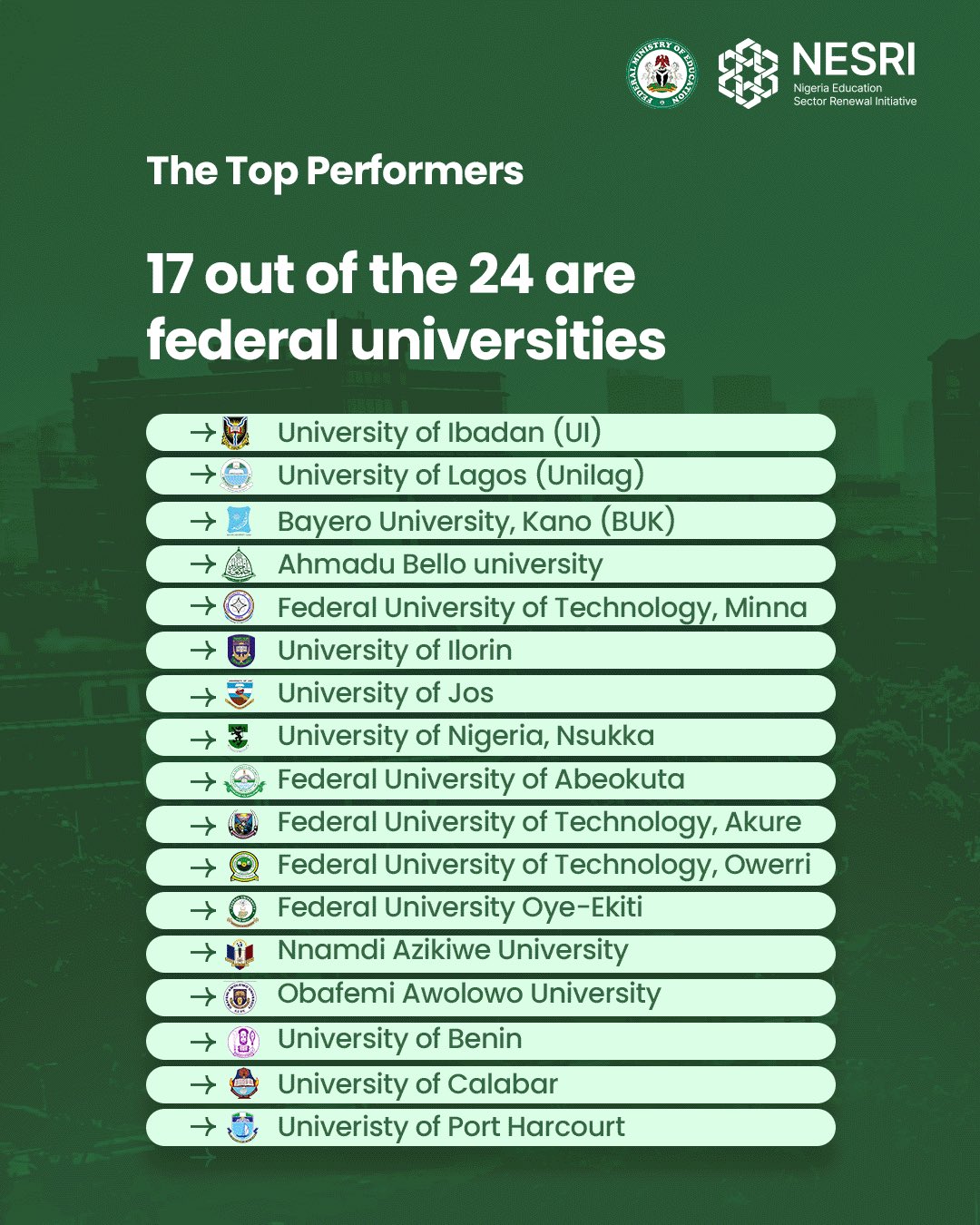
Thels Impact Consulting Case Review Engine Recommends the Following Strategic Approaches for Building Globally Competitive Nigerian Universities:
1. Strengthen Research Capacity: To improve research performance, Nigerian universities should invest more in research and innovation. This can be achieved by establishing research hubs in priority sectors such as agriculture, health, and artificial intelligence, while providing competitive grants through partnerships with TETFund, the African Development Bank, and private-sector organizations. Encouraging publication in high-impact journals through incentives can also improve research output and global visibility. In addition, existing research funds like the National Research and Innovation Development Fund(NRIDF) should be managed adequately and effectively monitored, to ensure that the investment delivers measurable impact for higher institutions development. Also, universities should build or upgrade institutional repositories, train researchers on publishing in indexed journals and encourage open access publishing to increase citation potential and research visibility.
2. Modernise Infrastructure with Smart Technology: We suggest that Nigerian universities adopt smarter and more digitized learning systems. This includes investing in digital libraries, Learning Management Systems (LMS), and hybrid teaching models such as blended and flipped classrooms. Beyond improving access to education, digital transformation can make universities more efficient and globally competitive. Universities should also launch targeted social media campaigns showcasing student success stories, research and Innovation breakthroughs, while optimising university websites for SEO and multilingual access to improve global discoverability. Platforms such as Research in Nigeria (RIN) should be used to promote research programmes and attract international applicants.
3. Drive Internationalisation: To attract more international students and faculty, universities should strengthen their internationalisation strategies. This can include establishing international student offices to streamline admissions, visa support, and cultural integration. Universities should also offer scholarships targeted at students from ECOWAS and African Union countries, and establish exchange programmes. This would foster stronger cross-cultural exchange, enhance institutional diversity, and position Nigerian universities as inclusive global destinations for international students.
4. Strengthen University and Industry Partnerships: Finally, TIC also recommends closer collaboration between universities and industries to improve graduate employability and innovation. Universities can achieve this through internship programmes, joint research projects, and innovation hubs that help students gain practical experience while solving real-world problems. Universities should also establish joint research and development (R&D) laboratories with companies in sectors such as technology, agriculture, and health, while strengthening the internship and co-op programmes with these companies..
The Projected Impact Global competitiveness: Improved rankings and recognition place Nigerian universities among leading global institutions.
Research excellence: Greater investment drives discoveries, publications, and collaborations with global relevance.
Enhanced student experience: Modern infrastructure and academic standards improve learning outcomes and employability.
International partnerships: Stronger collaborations attract funding, exchanges, and joint research opportunities.
National development: Competitive universities fuel innovation, entrepreneurship, and a skilled workforce to drive economic growth.
By prioritizing quality education, research development, digital transformation, and global collaboration, Nigerian universities can enhance their international standing and emerge as key players in the global higher education landscapes.