Nigeria’s Student Loan (NELFUND) Policy has entered its most critical phase. The question is, is the fund aware of the criticality of this hour?
NELFUND Could Transform Higher Education in Nigeria but Many Institutions Are Still Unprepared.
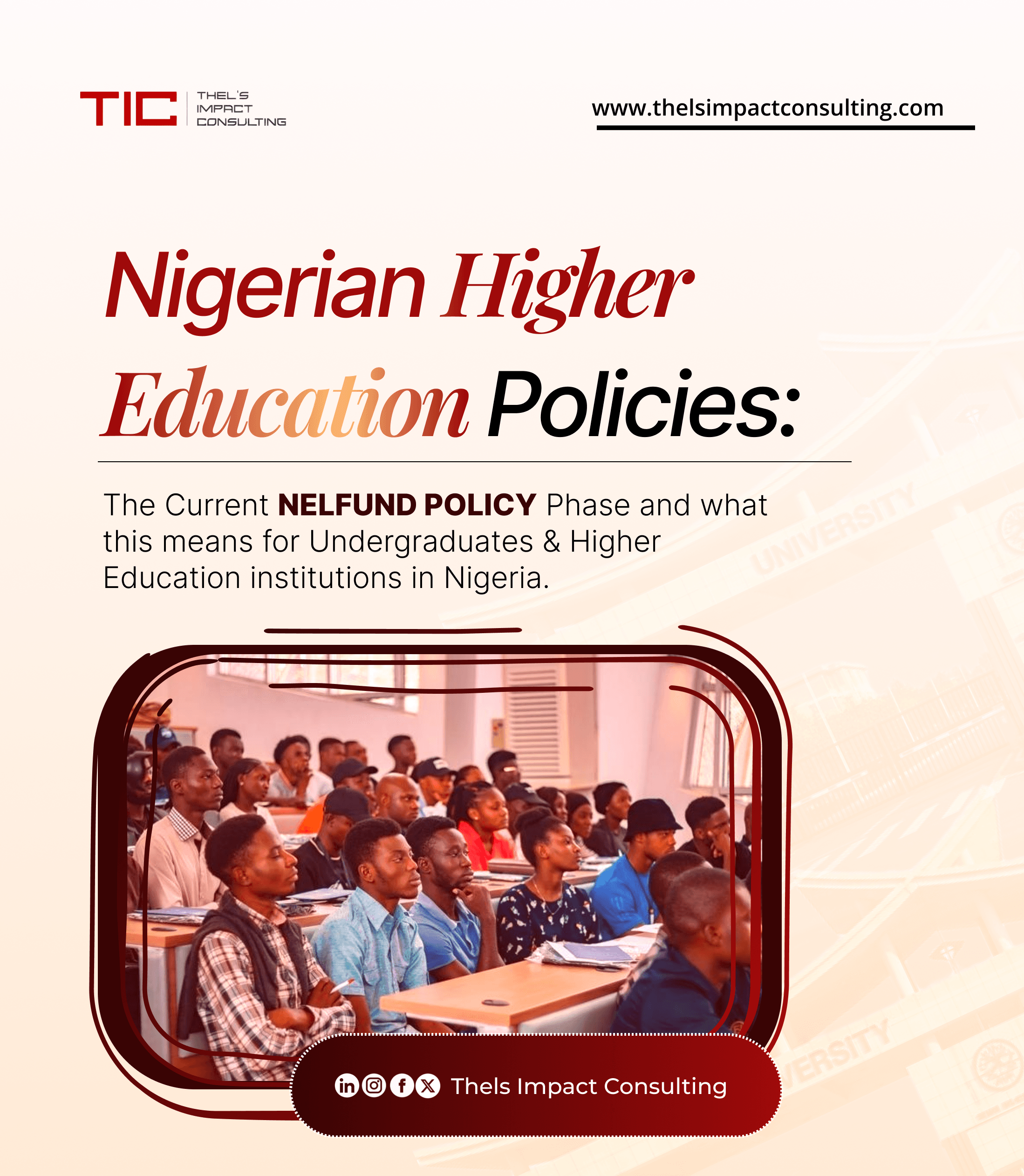
Nigeria’s student loan scheme, implemented through the Nigerian Education Loan Fund, has been in active roll-out since 2024 following the signing of the Students' Loan Act in 2023.
Now, in 2026, it is moving into enforcement and repayment structuring—marking a major shift in focus.
Recent updates from the Federal Ministry of Education, led by Dr Tunji Alausa, show efforts to strengthen verification systems and improve transparency. Whilst these efforts are commendable and essential for the system to sustain, there is a bigger elephant in the room. A proactive stance would now be to link repayment to employment and consequently employability of the beneficiaries, to enable them to repay the loan, which is a testimonial NELFUND earnestly desires to prove its model.
This policy is no longer just about access to education. It is now about accountability, employability, and outcomes.
Because students will repay these loans, the key question becomes: can they get sustainable jobs after graduation? This directly places responsibility on institutions and NELFUND to ensure that beneficiaries of the funds meet expectations. This literally means that not only the parents of the wards who want them to succeed, but also institutions like NELFUND, need them to succeed as proof of concept and, more importantly, for the fund's sustainability. Because if beneficiaries don't repay the funds, NELFUND can't keep taking money from the national coffers in perpetuity to supposedly run a loan facility. Otherwise, NELFUND is then a bursary programme that gives free money to university students. Should NELFUND students expected to graduate in 2027 and 2028 succeed, it would prove that the concept works and that Nigerians have now cracked a model for educating their populace sustainably. Then it triggers another chiral reaction on the system.
For Nigeria’s higher education system, this means enrolment may increase, but so will monitoring and scrutiny of its delivery. Institutions will be required to provide accurate student data, while their credibility will increasingly depend on graduate outcomes, i.e., demonstrate that their graduates are employable by aligning their programmes with labour market realities. Naturally, NELFUND may be more interested in students enrolled at institutions that offer a higher return on investment ROI. Which would not be a bad thing when one looks at it critically, as this would mean that if you want more of your students to get the NELFUND, then universities must produce better graduates who would be able to repay NELFUND, which means that the students must consider your institution as one that offers them more ROI. In simple terms, it is no longer enough to admit students. Institutions must produce job-ready graduates.
Data systems and compliance are now non-negotiable. Schools must digitise admissions, records, and student tracking. At the same time, graduates with aptitude and confidence in digital tools, which code for employability today, will define institutional reputation.
For universities, polytechnics, and colleges of education, the direction is clear. Build loan-ready systems, align with the National Universities Commission and the National Commission for Colleges of Education, and reposition programmes to produce industry-ready graduates.
This policy could reshape Nigeria’s higher education system—but only institutions that adapt quickly will benefit.
This is where Thel’s Impact Consulting, through its Research for Industry and Impact programme, offers a timely and practical model. As part of the broader Research in Nigeria initiative, it provides the systems and frameworks institutions need to align with the future NELFUND is creating, a future that will confront the Nigerian higher education system in a few years. Higher education institutions in Nigeria must now understand that the game has changed. It is no longer about numbers. It is about productivity, relevance, and outcomes.
Nigeria’s higher education system is being reshaped in real time. Institutions can either adapt to this new productivity-driven order—or be left behind by it. More like tilt towards productivity or perish.